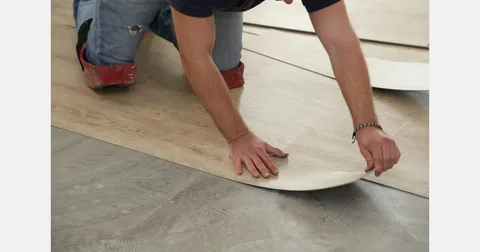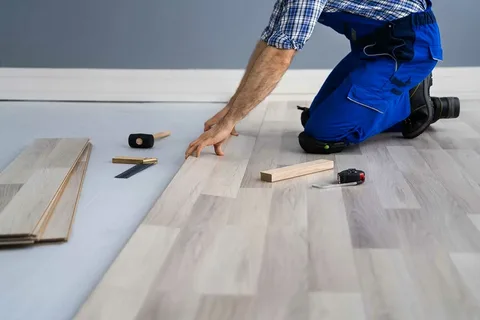
Commercial flooring needs to support a business every day. Employees walk across it, customers notice it, furniture sits on it, cleaning equipment moves over it, and certain areas may experience concentrated traffic for hours at a time.
Green Flag Flooring and Construction Inc. works with both residential and commercial flooring materials throughout Orange County.
For Mission Viejo businesses, choosing a commercial floor requires balancing appearance with maintenance, traffic patterns, installation timing, and the way the property is actually operated.
Start by Mapping Traffic Patterns
Not every part of a commercial interior experiences equal use.
Entrances usually receive the greatest amount of dirt and repeated movement.
Reception areas create the first visual impression.
Hallways experience concentrated foot traffic.
Private offices may receive far less activity.
Break rooms, restrooms, treatment spaces, or retail areas can create additional flooring demands.
Professional commercial flooring services should take these differences into account.
Using one flooring material everywhere can create consistency, but different areas may benefit from different performance characteristics.
The decision should begin with traffic, not simply with the product that looks best in a sample.
Think About the Customer Experience
Flooring contributes to how a business feels.
A professional office may want a quiet, comfortable atmosphere.
A retail space may prioritize clean visual lines and easy maintenance.
A property management office may need materials that remain presentable despite frequent traffic.
Healthcare-related interiors can have another set of practical concerns.
Color and texture affect the impression.
Dark flooring can create contrast and formality.
Lighter floors may make smaller spaces feel more open.
The design should fit the brand without creating unnecessary maintenance demands.
Maintenance Cost Matters as Much as Initial Cost
A lower-cost material can become expensive if it requires frequent specialized cleaning or replacement.
Commercial flooring decisions should consider routine maintenance throughout the expected life of the floor.
Ask:
- How often will the floor be cleaned?
- What cleaning equipment will be used?
- Does the business have in-house maintenance?
- Are stains likely?
- Will rolling chairs or carts use the surface?
- Is replacement of individual sections possible?
- How visible will ordinary dirt be?
These questions reveal the operational cost of flooring.
Consider Luxury Vinyl for Flexible Commercial Design
Luxury vinyl can work in many business environments depending on product specifications.
Wood-look designs can create a warmer appearance without introducing natural wood into every application.
Stone-inspired patterns can support modern interiors.
Commercial products may be available with wear characteristics suited to heavier traffic.
Businesses should confirm that the selected product is appropriate for commercial use rather than assuming a residential product can handle the same conditions.
Installation method is also important.
Product manufacturer requirements should guide preparation and installation.
Carpet Can Help With Sound
Carpet remains useful in some commercial environments because it can reduce footstep noise and create a softer atmosphere.
Professional offices, conference rooms, and selected workspaces may benefit.
Commercial carpet products are generally chosen with traffic and maintenance in mind.
Color patterning can also help manage the appearance of ordinary wear.
The tradeoff is cleaning.
Businesses should understand routine vacuuming, stain treatment, and long-term replacement expectations.
Tile Provides a Durable Surface for Selected Areas
Tile can work well in entry areas, restrooms, food-related spaces, and other locations where a hard surface is preferred.
Its performance depends on appropriate product selection, preparation, installation, and grout maintenance.
Slip characteristics should be considered based on the environment.
Commercial spaces also need to think about transitions between tile and surrounding flooring.
Changes in surface height or texture should feel deliberate.
Mission Viejo Businesses Need Flooring That Fits the Property
Companies considering commercial property flooring in Mission Viejo, CA should evaluate the building along with the floor covering.
Existing subfloors, door clearances, fixed counters, tenant improvements, elevators, access routes, and business hours can all affect installation planning.
A ground-floor retail location presents different logistical conditions from a second-floor office.
A business operating seven days a week also needs different scheduling considerations from a property that closes on weekends.
The flooring plan should reflect these realities.
Installation Timing Can Affect Revenue
Commercial flooring installation can interrupt normal operations.
Businesses should understand how long individual areas may be unavailable.
Some projects can be phased so portions of the business remain operational.
Others may be more efficient when completed during a closure.
Furniture, merchandise, workstations, and equipment need to be considered.
The installation sequence should reduce unnecessary movement of these items.
A floor selected without considering timing can create avoidable operational difficulties later.
Subfloor Preparation Is a Commercial Issue Too
Commercial floors often cover large areas.
Small irregularities can become more noticeable across those spaces.
Removing existing flooring may reveal adhesives, uneven areas, cracks, or other conditions requiring evaluation.
Preparation needs depend on the selected flooring system and the existing substrate.
Skipping those details can affect the appearance of the new material.
For businesses, preparation also needs to fit the project schedule.
Transitions Should Support Movement
Commercial properties often combine several flooring types.
Carpet may meet luxury vinyl.
Tile may connect to laminate.
A back office can have different flooring from the customer area.
Transitions should accommodate the relationship between surfaces.
The location of those transitions matters as well.
Placing a material change directly in a visually prominent or heavily trafficked area can draw attention unless it is designed intentionally.
Plan for Future Repairs and Changes
Businesses change.
Furniture layouts move.
Tenants expand.
A retail concept may be updated.
Commercial flooring should be considered in relation to those possibilities.
Some materials allow individual damaged sections to be replaced more easily than others.
Keeping product information after installation can also be useful.
If the same flooring needs repair later, knowing manufacturer, style, color, and lot details can simplify the search for compatible material, although exact future availability is never guaranteed.
Avoid Selecting Flooring Based Only on Photos
Online inspiration is useful, but commercial spaces have different lighting, dimensions, furniture, and traffic.
Samples should be viewed at the property.
The business owner can compare them against wall colors, millwork, counters, branding, and natural light.
Large commercial areas amplify patterns.
A design that appears subtle on a sample may feel much stronger across an entire floor.
Testing the material in context reduces that risk.
Build Flooring Around the Business, Not the Other Way Around
Commercial flooring should support operations while presenting a professional environment to customers and employees.
Mission Viejo businesses can make stronger choices by evaluating traffic, cleaning, brand image, installation timing, subfloor conditions, transitions, and future changes together.
The best material is not simply the one with the strongest visual appeal.
It is the one that fits how the business uses the property every day.